Finding God in the movies

What does a good movie mean to you? For me, it’s something that I can relax and enjoy, taking me away from my everyday challenges, and simply fun. It’s okay if it challenges me a bit, causing me to think, just as long as it’s not hitting me over the head with a message. To my surprise after watching Disney’s live action movie, Jungle Cruise, the thoughts that came to mind were about Jesus!

Perhaps it’s because I watched it just a few weeks after Easter, but when the main character insisted on sacrificing himself for the benefit of the others, it seemed to take on a Christological perspective. It’s not the first movie that I’ve seen that concurs; the Harry Potter saga springs to mind quickly, although I’m sure there are plenty more in the cobwebs of my brain and many more that I have not watched. It’s almost like there is some sort of subconscious need to have these types of stories end with some sort of resurrection of the sacrificed character. I wonder if these stories are the result of 2,000 of Christianity? Have the Passion, Death, and Resurrection been so ingrained in humanity, that it can’t help but to be reflected in the entertainment of the day? Or is it that the peace that the resurrected Jesus brings makes this type of story ending so perfect? 

I must confess there was a part of me that was disappointed when the character was brought back to life. It seemed rather contrived without much creativity: the two main characters argue and in the process fall in love so when the man dies and is restored to life, the two go on to live happily ever after. It was a “nice” finish to the movie and for a relatively family-friendly film, it makes sense for the events to happen as they did. Maybe this ending was best because it has a strong comedy component that it couldn’t have any other ending. 

With all this pondering, it brings to mind a summary of the 17th century philosopher, Blaise Pascal, who referred to humanity as having a “God-sized hole” in their heart that only God could fill. Perhaps this is why resurrection endings are so attractive to writers. In their quest to tell a story, they end up showing a spiritual need for God. It almost seems that the more fanciful, more over-the-top and unbelievable the scenario, the more it makes sense. Is it because, deep down, the truth of Christ’s resurrection fills that longing for God, so that when we encounter it in a comedic movie, it does make us feel like there is a happy ending to life? Or is it because I am a Catholic Christian who is pursuing a closer relationship with the Triune God, that I can see these parallels and these endings do bring me peace because they remind me of Jesus’ resurrection? After all, Jesus did say, “… seek and you will find…” (Matt 7:7)

God never ceases to amaze me in all the different places He can be found. In nature, in art and entertainment, and even in other people, God shows His love in so many diverse and unexpected ways. We can always find God in Church, but let’s not leave Him there; let’s bring Him with us in all we do every day of the week. 

A fuchsia wool world

Some people may see the world through “rose-colored glasses” which is seeing the positive in all they view. For me, I think the lesson is looking at the “fuchsia” colored wool.

During a recent spinning guild meeting, I was happily spinning some lovely merino wool on my spinning wheel in the beginning process of making yarn. My fellow guild member next to me commented on  what a lovely “purple” yarn I was making. While I appreciated her compliment of my skill, my mind got caught on the color. “You think this is purple?” I asked her rather incredulously. An interesting conversation regarding color ensued, but it left me a bit agitated. 

At one part of our gathering, we did go around the room stating what we were working on or showing off any completed projects. At my turn I asked the other members what color they thought the wool was. Many different answers were suggested: wine, plum, and purple. At my dismay, they asked what color I thought it was. “Fuchsia,” I replied. It was a very vibrant shade, deep and rich, so I could understand the suggestions of the wine and plum. But for me, it was a bit too much on the pink spectrum to be called purple. One wise spinner suggested I look at the single-strand yarn I was collecting on the bobbin. By taking the “fluff” and spinning it into a single strand, I was changing the way the light reflected on the fibers, making them darker. I began to watch as the spun yarn passed through my fingers and wound onto the bobbin. Some of it was very dark and rich in tone, while other areas were lighter and more of a pinky-red than the purple suggested. I started to wonder if I was seeing the wool as fuchsia because I wanted to see it as fuchsia.

During the Easter season, we get a number of Gospels recounting the reactions of the disciples to the risen Jesus. Even the closest of the chosen Apostles, Simon Peter and John run to the tomb, not because they believe the women’s account, but rather to try and figure out why they are causing such a commotion. In ancient times, women were considered unreliable witnesses and could not give testimony, so while one can sympathize with the two, Thomas didn’t even believe his fellow ten Apostles when they told him. The Apostles had seen Jesus raise others from death, yet they did not understand how it was possible for Him to die and rise again, despite Jesus telling them in preparation for what would happen. Were they too afraid of the consequences if a risen Jesus was the truth? What was it in their perspective that kept them from believing in Jesus’ resurrection? 

Two thousand years later as we play Monday-morning quarterback to the events of that first Easter, we — who know the history that followed after it — find it pitiful that the Apostles didn’t believe. Yet we do know how the Holy Spirit equipped the Apostles to be brave and face martyrdom in order to spread the Good New of Jesus Christ. We know of the persecutions of the early Church and how their bloodshed was the seed of Christendom. We profess at weekly Mass the beliefs of the Catholic Church, but what challenges do we face in our faith? Do we look at the world in the same way that Jesus does, ready to love and forgive others? Or do we choose to look from one perspective only? 

I found the band that had been attached to the wool I was spinning after returning home from the guild meeting. The color was “red-violet.” However, looking up the definition of fuchsia, it is “a vivid reddish purple.” While it seems that we were both right in describing the color, being challenged as to how I saw the color made me think about how I looked at the world. Easter is a powerful season to dig deeper into our faith. As we listen to the beginning of the Church with the readings from the Acts of the Apostles, let us be open to where our weaknesses are, so that we can pray and reflect on the Scriptures, leading us closer to Christ. 

Revived, renewed, and refreshed

Happy Holy Easter! We’ve spent 40 days on our Lenten journey, celebrated the holy Triduum and are now basking in the octave of Easter. Now is the time to take a look back so that we can move forward. 

Our Lenten practices are tools that have helped us prepare for Easter as well as revealed an aspect of ourselves that we usually overlook. For those who gave something up, how well did it go? Do you feel that you now have mastery over that or are you so thankful that Easter has finally come that you can go back to enjoying that which you have been deprived? What about those who instead of giving up something, added an extra practice or activity? Does it now seem so routine that you can’t imagine not doing it? Whether it’s giving up social media or being extra charitable in donating, they have all had an effect on us. Some may have faltered, others may have barely braved it out, and still others may have felt they could have done more. We take the opportunity, now that Lent is complete, to identify how our spiritual lives have been stirred. Our Lenten practices, along with the sacrament of reconciliation, revived our spirits and made them ready for Easter.

We can only receive the sacrament of Baptism once, however, each Easter, the Church in her wisdom asks us to renew our baptismal vows. As the sacrament washes away the stain of original sin, being the disobedience of Adam and Eve based on Satan’s twisted encouragement, the renewal of baptismal promises begin with assenting to reject Satan, his works, and his empty promises. We are then asked to confirm our belief in the Triune God, Father, Son, and Holy Spirit and the articles of faith usually professed in the creed. Having prepared ourselves, we are ready for this renewal of faith.

While it took 40 days to get ready, the Easter celebration lasts for 50; the first eight days are the Octave of Easter, celebrating as if each day is Easter itself, and the remaining days are the Easter season, which includes the solemnities of Jesus’ ascension into heaven and Pentecost, the descent of the Holy Spirit upon the apostles. Revived in our spiritual life by our Lenten practices and renewed in our baptismal promises, we combine these to be refreshed in our daily lives, bringing together all that we have learned about ourselves and our faith. We don’t return to the way we were before Lent, but strive to move forward with fresh eyes of faith. We have drawn closer to God and now is the time to continue on that road, rather than letting the little things in daily life distract us away. While we may not be called like the Apostles were to spread the Good News of Christ to other places, we are called to be a witness to what we’ve experienced this Easter. 

The Lenten journey and Easter season bring us to new life each year. Each year we learn a little more about ourselves and our relationship with God. This yearly practice is getting us ready for what’s yet to come: resurrection. As in all things, Jesus leads the way by His example. He IS risen, Alleluia!

The holiest of endings

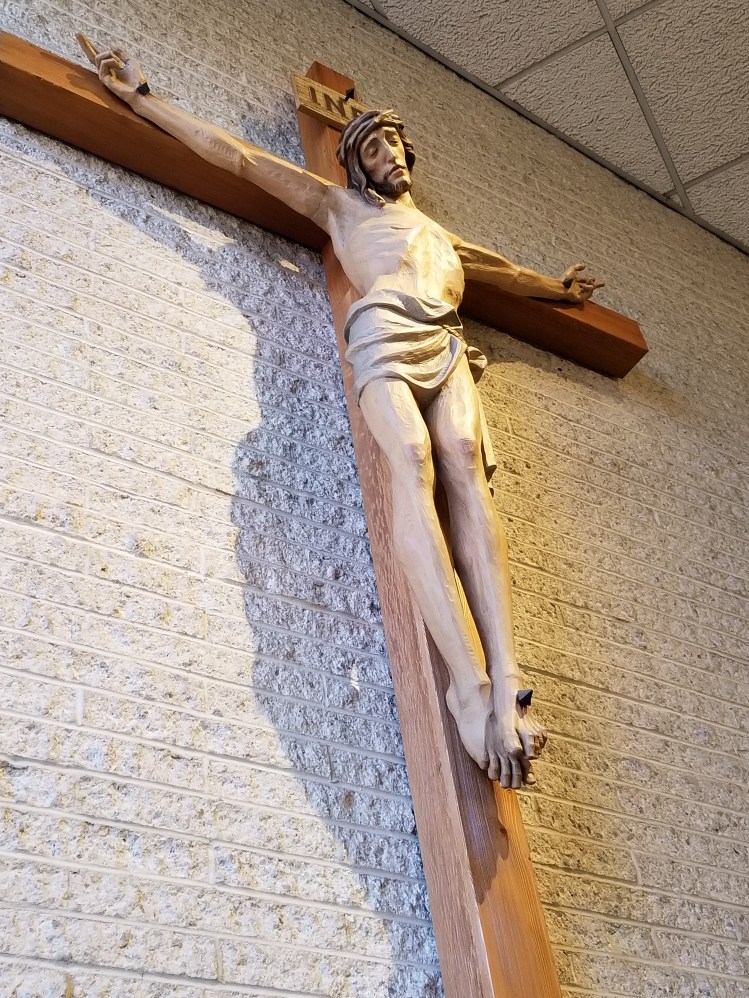
In previous postings, I reviewed five of the seven last words or sets of words attributed to Jesus on the cross. As this is holy week, the last two sets will be reviewed: one from Luke and the other from John. 

Then Jesus, crying with a loud voice, said, Father, into your hands I commend my spirit.”

Luke 23:46

According to Luke’s Gospel, these are the words of Jesus before breathing His last. Similar to the first set, these are directed to the Father, illustrating that God is receiving His sacrifice. While the Pharisees believe they are putting an end to an annoyance, the reality is that Jesus is The Lamb whose blood is being shed for all sinners. The religious elders of that time were very familiar with the sacrificial lamb used in the Passover supper, like the one that was just celebrated the night before. But they expected an earthly king who would wipe out all of their enemies, namely the nations that were oppressing them. Jesus challenged what they knew and understood about God. They may have practiced the theory, but it was more about stubbornly following tradition as if it was a legal obligation rather than having a relationship with God. 

This is a model way to die — to entrust ourselves to God. It’s also the best way to live. All too often our human nature whispers the ancient enchantment that we should know all and decide all for ourselves; basically playing god to get what we want. Only we find out that we spend way too much time and energy chasing after things that do not satisfy us. It’s the paradox that people still need to be convinced of, that when they give up their desires and seek God’s will, they become freer and more of themselves than they ever would have been by controlling their lives. Jesus’ final moments continue to be one of instruction and example. It expresses the mission of every person across the ages: to turn to God, making a sacrifice of their life to do His will. 

“When Jesus had received the wine, he said, It is finished.”

John 19:30

The Gospel of John attributes slightly different words at the end of Jesus’ crucifixion. Paired with the fifth set of last words, “I thirst,” these words not only convey the finality of death, but seem to be stating the obvious rather than imparting wisdom. Yet the coupling of these phrases paints a picture of a Passover that has taken on a whole new meaning, a new covenant. This Passover started just like most others did, but completely deviated from the traditional celebration when Jesus changed the bread and wine into His Body, Blood, Soul, and Divinity — and in the process consecrated the Apostles as the first priests who would “Do this in remembrance of me.” The need for the traditional Passover feast of the lamb had been completed. Jesus had created a continuum from the Last Supper through to the Crucifixion, to be re-presented at every Mass that followed. These two events are not merely linked, but intertwined; the Eucharist requires the sacrifice of the cross and vice-versa. 

In this new covenant, Jesus restores what sin ruptures. It was the purpose of His life on earth. He is a model of how to be human and have a relationship with the Father. His last words, in whichever Gospel version you review, point to who He is (the Son of God) and summarizes His mission. As we remember and honor these last words during the holiest time of the year, may the ending of Jesus’ life on earth bring a rebirth of our relationship with the all-loving and all-merciful God.

Drought of love

The fifth set of Jesus’ last words are two brief ones, comprising seven letters in total. Yet they may be the most poignant spoken on the cross. They drip with a powerful meaning that one could spend a lifetime pondering.

After this, aware that everything was now finished, Jesus said, “I thirst.”

John 19:28

If one reads this through a purely logical and human perspective, it makes sense for Jesus to speak these words after all the hardship He has endured. He has probably been thirsty for quite some time. And from a human point of view, it can be a cry for compassion and mercy, tugging on our heartstrings at the most basic of levels. After all, haven’t we all experienced what it’s like to be thirsty?

But these words, captured by the evangelist, are not meant to be read solely in a secular way. The spiritual meaning of these words is much more significant. To understand them, however, requires a bit of knowledge of the Passover meal itself. 

Ironically the Gospel of John does not include the institution of the Eurcharist as told by the other three Gospels. Each of them contain some sort of direct phrasing as Jesus passes the cup, He says, “Amen, I say to you, I shall not drink again the fruit of the vine until the day when I drink it new in the kingdom of God.” (Mk 14:25) Dr. Scott Hahn, a Catholic theologian, explains that there are four “cups” in the Passover meal. The third one is the one used for the Eurcharist. It is the fourth cup, as indicated in the synoptic Gospels, that Jesus does not “partake of” during the actual meal. 

A Google search on this topic reveals many options that are similar in nature. However, I found one particular document from a Catholic parish in Maryland explaining the four cups used in the Passover Meal in light of the Last Supper recorded by Matthew, Mark and Luke. The four cups are:

  • Sanctification
  • Judgment or Deliverance
  • Redemption
  • Praise or Consummation

These four cups are based on the promises that God made to Moses to bring the people out of Egypt, save them from slavery, and take them to be His own people. The third cup, the one used for the Eurcharist, would be that of Redemption, leaving that fourth cup — the one not consumed by Jesus — to be the cup of Praise or Consummation.  It represents God’s promise to “…take you as my own people, and you shall have me as your God.” (Ex 6:7)

So what do these cups have to do with these last words? It is here that Jesus is indicating His thirst, not just for physical drink, but the spiritual wine that is the fourth cup, consummating God’s promise. Jesus is at the point where He will go the farthest that a human can go from God, into death. Yet even death itself cannot be beyond God’s grasp. From the events of the Last Supper through to the resurrection, Jesus repairs the breach that the first sin, and all those subsequent, causes. Jesus thirsts, and He drinks. 

This thirst, however, has not been quenched. On Sept. 10, 1946, while riding on a train to Darjeeling, Mother Teresa felt Christ’s words from the Cross – “I thirst” – impressed upon her heart. This was her “call within a call” as she described it, and the impetus to serve the poorest of the poor in India. These words were so instrumental, they are painted on walls of every chapel of her Missionary Sisters of Charity. Mother Teresa was not the only modern saint to hear this calling. In March of 1937 (Holy Week), St. Faustina had a vision of the crucified Lord and heard the same words of Jesus, “I thirst,” and noted His words in her diary (Diary 1032).

These simple words of Jesus, almost His last ones, may have been a struggle to communicate but reverberate for us today. Do we hear Jesus calling our name, thirsting for a relationship with us? Thirsting to be loved by us? As we prepare for Holy Week, let us also prepare to respond to Jesus’ thirst for us.

From forsaken to praise

Have you ever heard the first few words of a beloved song, and instantly know not only the rest of the words but the meaning of the song as well? The fourth set of Jesus’ last words are the Israelite version of a popular song; one that travels from the depths of nothingness to glorifying God.

My God, my God, why have you forsaken me?

Matthew 27:46

Taken at face value, these words are uncomfortable to hear and seem downright scandalous to be coming from the mouth of Jesus. If Jesus is the Son of God, the Second Person in the Trinity, how can He be forsaken or abandoned by God the Father? It doesn’t seem possible! Why would Jesus waste His precious last breaths speaking something that can seem blasphemous?

Yet Jesus is not spouting some random words, but is quoting the songs that were popular to the Israelites of Jesus’ time: the Psalms, or more specifically He quotes the beginning of Psalm 22. It is The Prayer of an Innocent Man, attributed to David, and contains four sections. The first 12 verses are very sad, yet they mirror what happens at the crucifixion. “All who see me mock me; they curl their lips and jeer…” (6) describe the actions of the crowds at the crucifixion in all four Gospels. “You relied on the Lord — let him deliver you…” (9) is recorded in Matthew, “He trusted in God; let him deliver him now if he wants him.” (Matt 27:43)

The second section of Psalm 22, verses 13 through 22, contains a description of one who is dying, “Like water my life drains away..” (15) as well as descriptions of those watching. It’s not just the people the Pharisees have convinced to deride Jesus, but also the Roman soldiers when it references “…they divide my garments among them; for my clothing they cast lots.”(19) These two sections are very sad to read; and joy seems to be as far away as another planet. 

Sections three and four of the Psalm are all about praising God. They are such an about-face, that one reading it may wonder if the last two sections belong with the first two. “For God has not spurned or disdained the misery of this poor wretch, did not turn away from me, but heard me when I cried out.” (25) If the Jews watching heard Jesus and started thinking about the Psalm, did they remember this line? Or, as it conveys in the Gospels, are the words  misunderstood, thinking that Jesus is calling out for Elijah because this Psalm would have been too descriptive of what was happening? Was this an invitation, to those who knew the Scriptures inside and out, to be challenged one last time by Jesus, but not in condemnation, but rather as an invitation, to repent and praise God? 

The fourth section of the Psalm seems rather prophetic with phrases like, “All who sleep in the earth will bow low before God…” (30) This seems to convey that the ancestors are dwelling before God in eternity. Perhaps it’s the very last verse that sums up what Jesus is accomplishing by dying on the cross. “The generation to come will be told of the Lord, that they may proclaim to a people yet unborn the deliverance you have brought.” This is the whole mission of the Apostles and all who have followed in their footsteps. By our words and deeds we proclaim the love Jesus has for us, including to die and rise from the dead, so that there is no place where His love cannot find us and to know we won’t be trapped in death forever, but rather can be in the presence of God. 

What starts as a depressing topic is turned around to be a source and call for joy. I wonder if any of those at the foot of the cross realized what Jesus was saying —  either at the moment or after the resurrection — and came to believe in Jesus? However, Jesus’ words are not meant for just those who lived at that time, but are meant for us to ponder as well. Do we turn away from sin, seeking God and praising Him for all that He has done for us? Or are we like those around Jesus who mistakenly hear something else so that we don’t have to think about the damage our words and actions can cause? 

At the foot of the cross

The third set of the last seven words of Jesus is addressed to His mother, Mary, and Saint John the Beloved Apostle. These words take a little family and transcend their relationship throughout all generations. 

When Jesus saw his mother and the disciple there whom he loved, he said to his mother, “Woman, behold your son.” Then he said to the disciple, “Behold, your mother.” And from that hour the disciple took her into his home.

John 19:26-27

Mary and John stood  at the foot of the cross. They could  do nothing but watch and pray. Yet, they are there for Jesus, to support Him as a family does when one member is suffering. They are the witnesses of His final hours, and  while it is painful to watch, this is the reason Jesus came to earth — to suffer, die, and rise for the redemption of our sins. They have the courage to stand amongst those who believe this is the end of the disturbance that Jesus has brought about with His teaching. I would have thought they would be fearful for their lives as well. But perhaps their love for Jesus was stronger than any fears they may have had for their own lives. Maybe it’s because John was the single Apostle to stand at the foot of the cross, that he was spared a martyr’s death that all the other Apostles eventually faced. I can only imagine the trauma and emotional strain of watching a beloved friend be executed in such a brutal manner that  the price of this witness may have cost him more than a martyrdom would have.

The exchange that Jesus directs from the cross has long been taught by the Church: it’s at this moment that Mary becomes Mother to the Church and Mother of All. John is the sole representative of all the Christians that shall live in the ages that follow. John receives Mary and cares for her needs for the duration of her lifetime. However, Mary’s needs have not stopped there, but rather they have been transformed to care for all God’s children, and directs us to do God’s will in the charity we share with our neighbor. Likewise, we continue John’s work by seeking her intercession and guidance to draw closer to God.

Mary is the Ark of the New Covenant. She carried Jesus within her womb and raised Him, protecting His young life and supported Him during His ministry. Once again she is called to accept God’s will as she watches her precious Son slowly die in agony. Her pain is as sharp as a sword, just like Simeon predicted all those years ago when Jesus was first presented in the Temple. One could even ponder as to whether or not she knew what would happen and how things would end. Yet even if she did know about Jesus’ inevitable crucifixion, His resurrection needed to follow His death. Each moment Jesus hung on the cross must have felt like a lifetime. But Mary had declared herself the handmaid of the Lord and she trusted in Him, no matter the cost. 

Let us ponder what it means to stand in support of Jesus on the cross. Is our love for Him stronger than our fears? Do we seek to do what God calls us to do? Do we trust God even when it seems that the worst possible thing is happening? Calling out to Blessed Mother Mary and St. John, let us ask for their intercession as we progress through this Lent and pick up our daily crosses.

Stealing into heaven

The second set of the seven last words of Jesus were addressed to one of the men being crucified with Him, the man commonly referred to as “the good thief.” Let’s take a look at Jesus’ response to that man and dive deeper into the possibilities of what prompted it.

“Amen, I say to you, today you will be with me in Paradise.”

Luke 23:43

Merriam-Webster defines amen as an interjection that is “used to express solemn ratification.” When Jesus uses it, it’s like putting the whole phrase on a billboard of flashing lights with lots of exclamation marks. It calls our attention in a big way and makes us take careful notice of what is being said. This is not just for the person being addressed, but rather for all of us.

“I say to you…” is very simple phrasing, but carries a great weight to it. The “I” in this case is really the great “I AM,”  the one who is the cause of all life. The word “say” is very humble and perhaps a more illustrative word to use is “declare.” Jesus makes it very clear that what comes next is absolute for this man, beyond any shadow of doubt. 

In this physical realm that is measured in time and space, having a delineation of time, the word “today,” indicates the immediacy of the action that’s about to take place. Jesus assures the man that He will be joining him in the most perfect state of bliss there is: the paradise that is heaven. This thief seems to be stealing one more thing, bypassing any purging and going directly into communion with God. 

For those still on earth, this can seem an outrage, after all this man even admitted to his crimes. Surely he must be punished! (As if being crucified was not punishment enough?) If we look at the preceding verses, 39-42, the man does three things that most people spend their whole lives trying to do. First, he acknowledges Jesus as God, but not in a statement of belief but in correction to the other man who is also being crucified with him. His chastisement is a teaching moment for all of us, that even in difficult situations, we can and should speak up for the Truth. Secondly, the man admits that the crucifixion is just punishment for the crimes he committed; he is indeed taking responsibility for the sins he committed. Lastly, he petitions Jesus, not for forgiveness or to go to Heaven, but humbly asks just to be remembered. Perhaps he is struggling to forgive himself for the actions that have put him on the cross. Since he believes in God, I don’t think he would doubt God’s ability to forgive, but rather seeks a lesser blessing. He is, before all the world, changing from a thief into a saint. 

Jesus’ powerful response reminds us all of what a life spent seeking a relationship with God is all about. It illustrates that while we have breath within us, it is never too late to turn back to God, acknowledge our sins, and pray. While the man still had to deal with the trauma of such a painful death, knowing that upon its cessation he would be welcomed into heaven must have restored his hope and eased his mind. Even in His final moments, Jesus brings healing and comfort to those who acknowledge Him. 

In this time of Lent, let us look at the example of this “good thief” and see where we need to humbly repent of our sins, turn back to God, and spend time in prayer — both for ourselves as well as for others. 

Catholic Girl Journey Logo

The last words

The Tre Ore, or Three Hours of Agony, is usually a reflection of the last words of Jesus on Good Friday, conducted between noon and 3 PM. Rather than try to squeeze a reflection of each phrase into one post, I thought it would be better to spend each week this Lent reflecting on just one of the seven last phrases Jesus spoke on the cross. 

“Father, forgive them, they know not what they do.”

Luke 23:34

This text is often referenced when we are urged to forgive family and friends who have become estranged to us, or who have caused harm to the relationship we have with them. It is lifted up as the model for all Christians: to forgive others, regardless of what they have done to you, up to and including death. However, our human nature continues to grasp for control over situations and experiences; we may say we forgive another, but end up holding on to the hurt and sometimes using it as a weapon against the person who originally wronged us. In trying to avoid future hurt, we want to be the first ones to strike in defense of ourselves. 

True forgiveness calls us to not only let the hurt go, but to let God be the judge — that is to give God control of that relationship. Those who offend us may not realize the hurt they have caused, and at the same time, we may not realize what the offender has going on in their life that made them say or do what we found offensive. While this does not excuse their actions, we cannot correctly judge another as we do not know what was in their mind and heart. 

Forgiveness of deep hurt takes not only time, but Divine intervention. It’s not something we can immediately will ourselves to do. The feeling of being hurt can be overwhelming. We may even call to mind this text, but waves of hurt continue to wash over us, threatening to drown out any possibility of forgiveness. Did Jesus feel this way on the cross? Is that why He made sure to speak these words aloud, so that we could follow in His footsteps of asking the Father to help us when we want to forgive others when our pain is too great? 

It’s all too easy for us reading this line over 2,000 years later, to feel entitled to judge the actions of the Jewish leaders and the Roman soldiers. They crucified an innocent man and we have a tendency to condemn their actions. We want to shake a pointed finger at them and tell them how bad they are for killing Jesus. Yet Jesus pleads to the Father on their behalf, asking for mercy since the people involved didn’t understand the magnitude of what was happening. How can we condemn the leaders and soldiers for their actions, when Jesus and the Father have forgiven them? Perhaps these words are also meant for us not to judge those who did treat Jesus poorly and to forgive them as Jesus and the Father did. Maybe this is the first challenge for us as Christians: to take that wagging finger and point it back to ourselves, as it is our sins from yesterday, today, and tomorrow that required Jesus to be put to death. 

To forgive is to literally give up the claim of punishment or revenge. Forgiveness is truly a gift of love. It takes both prayer and practice. During this Lent we can reflect on where we need to practice forgiveness in our relationships and pray to Jesus and the Father to help us give this gift to others so that we can begin to repair the broken relationships and perhaps be forgiven of the wrongs we have caused to others.   

Catholic Girl Journey Logo

Spice up Lent

Have you ever thought of Lent as the season of “No”?  That’s the way it seems sometimes: no meat + no big meals + no spending = no fun. Is that really the outlook the Church is asking us to take for the next 40 days? 

In the Gospel for Ash Wednesday (Mt 6:1-6, 16-18), Jesus tells us how we are to approach this sacred season, “… anoint your head and wash your face, so that you may not appear to be fasting, except to your Father who is hidden.” Even Jesus knows that when you look attractive, you feel attractive, and that produces a radiance of positivity. Lent’s not just about making sure you groom yourself, it’s about challenging yourself to go beyond how you actually feel and tapping into the divine support that Lenten practices can bring. 

The Church asks us to abstain from meat on Ash Wednesday as well as all Fridays of Lent, including Good Friday. This requires us to pay attention to what we are eating and what day of the week it is. We could take the approach that it is a checkbox we just need to check off, saying we  ate no meat for each of the meals throughout the day. This does not mean that you need to limit yourself to baked fish and boiled potatoes each of these days. Why not challenge yourself to a cuisine that you may not be familiar with: tofu lo mein, sushi, or aloo gobi. Even a mild, Indian-spiced dish can put color on your cheeks! 

Just as we pay attention to what we are putting in our mouths, we can also pay attention to what we are putting into our minds. Perhaps what we sacrifice, or give up, during Lent is consuming information that does not grow our relationship with God: spending excessive time on social media, reading and/or watching TV or streaming service programming that does not align with the Catholic faith, or prioritizing other activities at the expense of spending time at Mass or in prayer. And just like trying some unique cuisine, sampling different prayers can take a bland relationship with God and turn it into a vibrant, life-giving one that exceeds our expectations.. 

Praying, fasting, and almsgiving are the three hallmark activities of Lent. It’s possible to spice up the first two, but how does one make almsgiving attractive? Perhaps one could make a game of it: every time you reach for your phone, you put a quarter in a jar (either physically or virtually – I wonder if they have an app for that?). Maybe it’s by challenging a relative, friend, or colleague to participate in an activity with you and compete to make the largest donation. Since time is money, maybe volunteering at a soup kitchen could take you out of your comfort zone and offer new insights into how you can contribute to your community.

Lent is a time to remove the obstacles that keep us focused on ourselves and redirect the focus to react to the needs of others. Making sacrifices can feel painful when we dwell on what we can’t have or do, but the discipline we develop can serve us well in any area of our lives.  And, when we add in a few well-seasoned alternatives, our faith and our relationship with God can be transformed into an overflowing cup of blessings we can share throughout the year..