Catholic Girl Journey Logo

Choose to believe

The rosary app I sometimes use includes scripture passages to reflect upon at the beginning of each mystery. When the first Glorious mystery comes up, I’ve started to notice the passage they use is from John’s Gospel and has made me look at the Resurrection in a new light. 

After attending years of Masses, especially in the Easter season, we’re all familiar with the various Gospel accounts, however they are often small snippets of the whole account. What started me pondering is the verse from John’s Gospel, “Then the other disciple also went in, the one who had arrived at the tomb first, and he saw and believed.” (John 20:8). This is the first time that belief is mentioned in regards to the resurrection. But it’s oddly juxtaposed by the following line, “For they did not yet understand the scripture that He had to rise from the dead.” (John 20:9). So what exactly was John believing? Did he believe that Jesus rose? Or did he believe that somehow, in some way, Jesus was alive again? What about Peter? Did he not believe at that point? Did he have to wait to actually see Jesus before he believed? And then later in that chapter of John’s Gospel, we hear about Thomas who refused to believe unless he actually touched the wounds of Jesus.

If we pull back and view the appearances of Jesus after His resurrection as a whole, we see that belief comes to each disciple differently. For John, whose whole Gospel is very much mystical and contemplative, he was able to see and recognize the evidence of Jesus’ resurrection from what was left in the tomb, and more specifically, how the burial cloths were positioned. He may not have fully understood what had happened, but at the very least he knew Jesus was alive. By including the experience of Thomas, John provides hope to those who struggle to believe Jesus is God and Messiah.

We are all called to the tomb. We see the evidence of 2 millennia of belief from people of all walks of life — the saints and blesseds. Do we see and believe? Or do we wait for a personal encounter with Jesus?  As Christians, we are called to believe that Jesus, the Son of God, was born, lived, preached, suffered, died, and rose from the dead 2,000+ years ago. As Catholics, we are called to believe that Jesus is present to us today in the Real Presence of His Body, Blood, Soul, and Divinity in the Eucharist. We are able to see, talk, and touch Him each time we are at Mass. Do we believe He is with us, or do we suspend our judgement? 

We live in a world of multiple religions where some honor Jesus as a prophet or a great teacher. But that is only a small portion of who Jesus really is. It’s like they accept Jesus’s preaching because that’s what earthly men do, but when it comes to the resurrection, they can’t believe it, because that is something only God can do. We are called to proclaim Jesus as GOD. At each Mass and each opportunity for adoration do we attend with the belief Jesus is God and is present in our lives? This is not just about making an intellectual decision, but rather a life altering one. Either we believe in Jesus and transform our way of life, or we are not believers. To believe is to change from our self-facing desires, to seeking to do God’s will. Again, in this age of self-help books and instant gratification, it’s hard not to choose the comfortable way. “Then Jesus said to his disciples, ‘Whoever wishes to come after me must deny himself, take up his cross, and follow me.’” (Matt 16:24) Jesus is clear that we will each have crosses in our lives, but rather than reject them, we must embrace them and follow where He leads. 

Belief in Jesus and living our lives trying to do God’s will leaves evidence in the world. We become agents of God’s goodness and blessings in both small and big ways. We do it, not for our glory, but for the glory of God, to show others they are loved by God and support them in their journey towards a relationship with God. Each day we make our choice to deny ourselves and believe in Jesus so that God’s will may be done in our little corner of the world. 

Catholic Girl Journey Logo

Pray, work, and rest

A few weeks ago the Gospel for one of the weekday Masses was about Jesus being Lord of the Sabbath. That reading made me think of other passages to define what we need to survive: prayer, work, and rest.

Jesus’ disciples were walking along a road and were hungry. They began to pick the heads of grain and munch on them. They weren’t picking it to sell, nor to make any particular dish, just to get a little food in their stomachs. Because it was the Sabbath, the Pharisees quickly passed judgement saying they were unlawfully working on a day of rest. (Matt 12: 1-8) When Father Herman was giving the homily, he identified the disciples’ actions as gleaning. He then referenced that in the book of Leviticus, Jews were specifically instructed not to harvest an entire field, but rather leave some for the poor, the widow, the orphan to glean so that they may survive.

In mandating the Jews refrain from harvesting every single piece of produce, God is giving to the less fortunate the dignity to work for what they consume. Just because they were poor or in reduced circumstances didn’t mean they deserved to be given things on a silver platter. Rather, the poor are to be given the same opportunity to work for what they need, just like those who worked to provide for their families. An example of what this looks like is recorded in the book of Ruth, where Naomi, on behalf of herself and Ruth who are both widows, follow the harvesters in the fields to glean what is left so they can survive. It is Ruth’s compassion for her mother-in-law and her diligence in gathering what she can that she is noticed by Boaz, and becomes not only his wife, but the great-grandmother of King David and an ancestor to Jesus.

Many think that work started because of the first sin, however, that is erroneous. “The LORD God then took the man and settled him in the garden of Eden, to cultivate and care for it.” (Gen 2:15) Adam was called to take care of the garden of Eden. The work was not a chore to be wearied by, but rather a participation with God in the creation of the world. It is only after the fall that God curses the ground so that the work of producing a harvest is a struggle requiring laborious effort.

The book of Genesis includes the day of rest once God completed creation. God is an infinite being but He blesses the day to make it holy, not for Himself but to be a pattern for all who are created in His image and likeness should imitate by resting from the strenuous effort of toiling to bring forth food and shelter. Rest is important for everyone, but not at the cost of damaging your body by starving. In designating a time for rest, God’s blueprint for life shows that it needs to be balanced with work. Like any other good thing — too much rest, too much food, too much sun — can have negative consequences on our bodies.

These eight lines in Matthew’s Gospel illustrate what it means to be a Christian. Our life is a journey with Jesus and He walks with us. Our life of prayer is similar to the disciples walking with Jesus. The road Jesus chose to walk down with his disciples was next to fields. Similarly, Jesus provides us the opportunities to participate in obtaining what we need, both physically and spiritually. As Lord of the Sabbath, He is merciful towards us and allows rest in proportion to our needs.

“But seek first the kingdom [of God] and his righteousness, and all these things will be given you besides.” (Matt 6:33) Jesus tells his disciples that first we need to seek God (pray), and what we need will be given to us. What God gives us, are opportunities to participate in obtaining the goods we need to live on earth, which is times of both work and rest. That is how we need to order our days and our lives: Pray, Work, and Rest.

Humble love

God loves us. We don’t need to do anything but just be and He loves us. How do we respond to such a magnificent gift?

God is our creator and knows more about us than we do of ourselves (or maybe that we’re willing to admit). He wants us to be the best we can be. He made us in His image and likeness, so that the more we grow into a relationship with Him, the more we can reflect His image back to Him as well as to those we encounter. Most people are aware of their flaws and try to hide or overcome them. To know God loves us as we are in this moment — flaws and all — can be overwhelming and incomprehensible. It is easy to discount God’s love and turn away from Him because of our brokenness. A humble person will not turn away but lean in on God to heal their defects. It may take a lifetime of work on both our part as well as with God’s help, but if we turn our flaws over to Him, he can guide us through our journey.

It can be intoxicating to think about the love God has for us. Rather than learning more about God and having a relationship with Him, we can think that His love allows us to do anything we want, especially if He loves us with whatever sins are on our souls. This “it doesn’t matter” approach is prideful love, more about loving oneself than God. While God does love us as we are, He does not want us to stay as we are, but grow in love and holiness for Him. If we continue to think that we don’t have any changes to make in our lives, our attitudes, or our habits, we will not grow as a person, but rather be stuck in a false reality that we have grown accustomed to. When we deny our sins, our lives and relationships are mere shadows of what they could have been.

Jesus came to be our savior and redeemer at a particular place and time. In a letter to the Romans, Paul states, “Indeed, if, while we were enemies, we were reconciled to God through the death of his Son, how much more, once reconciled, will we be saved by his life.” (Rom 5:10) God has given us the way to a life with Him through Jesus. For those who turn away because of their flaws, they can be forgiven through the mercy of Christ. This means turning away from our flaws and fighting the bad habits we have that lead us into sin. We can’t do it on our own, which is why we have the Mass, the Sacraments — especially Reconciliation and the Eucharist, and the Church to aid us throughout our lifetime. God does not expect us to fix ourselves before we turn to Him, He wants us to turn to Him so that He can help heal us and overcome our sinful nature through the Church He left us. 

God loves us so much that He allows us to choose. We can choose to love Him or we can choose to love ourselves. God respects our free will and will not force us to choose a relationship, or eternity, with Him. He will pursue us and give us every opportunity to meet us where we are and to learn about Him and learn to love Him while we are on earth. Spending our time on earth in love with ourselves will distort our ability to recognize God and choose Him at the moment of our death. Let us choose to love God now with humble and contrite hearts.  

Resurrection faith

It started innocently enough. It was a video about Jesus raising Lazarus. However the YouTube rabbit-hole I went down caused me to reflect on faith and resurrection.

The first short video was about Lazarus not wanting to be raised from the dead, as if he was the only person who didn’t want it. I found it quite an odd statement. Jesus did raise several people from the dead, namely Jarius’ daughter and the son of the widow are recounted in Luke. So why would Lazarus be singled out? From the cartoon illustrations used in the video, the narrator says that Lazarus was in heaven and that he didn’t want to leave. While I can’t claim to know how God works, my understanding is that heaven was “closed” to souls after the fall of Adam, until Jesus’ death and His descent to open up the netherworld to those who should have gone to heaven. Since Jesus hadn’t died yet, I would think Lazarus would have entered the spiritual waiting area with all the others who passed before him. As the narrator was not Catholic, it could explain why he thought Lazarus went straight to heaven. But what about the widow’s son and Jarius’ daughter? Wouldn’t they have felt the same as Lazarus about being returned to an earthly life to die again?

Perhaps because the video topic was about resurrection, the algorithm started suggesting video interviews by people who have had near death experiences, or NDE. The one that caught my attention had a shocking title, I No Longer Have Faith After My Near-Death Experience. In the short 15-minute video, Peter Panagore explained his near-death experience after ice climbing. During the experience, he asked to be returned to his body for his parents’ sake, however, after returning from such an illuminating experience, he did suffer depression and felt he had made a mistake in coming back. The adjustment did take time, and even though the reasons for the decision were out of love for his parents, it was definitely a sacrifice. He recounted his experience in a book, Heaven is Beautiful, in which he states he no longer has faith, belief, or religion, as well as no doubts. While it does sound sensational, it makes sense. Since he had such a positive experience of the Divine, as he refers to God, he knows where he will go when his final death comes. He knows God, he knows heaven. Faith is belief in something that is unseen/unexperienced. Even St. Paul refers to the hope of our faith in God in his letter to the Romans, “Now hope that sees for itself is not hope. For who hopes for what one sees? But if we hope for what we do not see, we wait with endurance.” (Rom 8:24-25) 

The main message in his encounter was one of Love. While Peter used analogies to explain his experience, he could not quite put into words the depth of the Love he felt. After coming back, the beauty in this world pales in comparison to what he experienced in the presence of the Divine. Peter had the privilege of experiencing the Love of God without the constraints of a human body. For the rest of us, we need to rely on our faith. We can listen to his experience and learn from it to improve our relationship with God. Perhaps that’s noticing and acknowledging the everyday, ordinary gifts that God gives us. Maybe it’s appreciating more fully the beauty and wonder of all of God’s creations. Or maybe it is opening ourselves up to be loved by God and allowing God to love us, even when we feel unlovable. We are a people with the faith in the resurrection. While there are some who have had near-death experiences and glimpsed what was beyond time, space, and matter, they only experienced it with their souls. At some point our bodies will be resurrected and returned to our souls. What that will be like, well Jesus and Mary know, but we will have to wait for the fullness of time that God the Father has determined for that event.

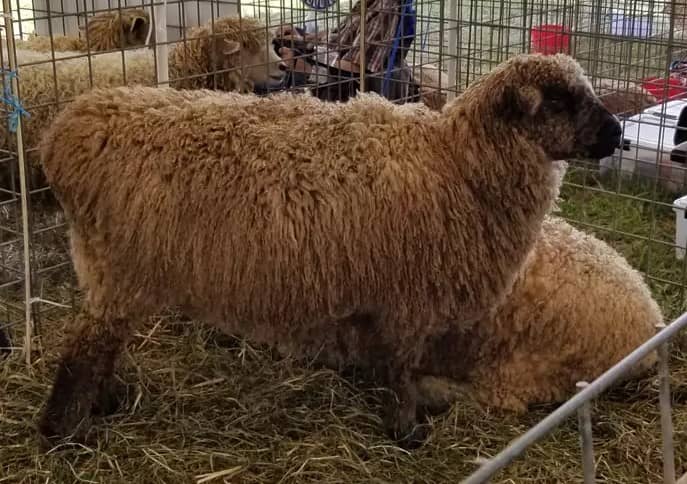
Sheep from Montpelier 2021

Home with the Lord

As we finish out the last few verses via the book, A Shepherd looks at Psalm 23, by Phillip Keller, we find ourselves, and the sheep, making a full circle of a year’s sheep tending.

You anoint my head with oil; my cup overflows.

The author’s interpretation of this passage really surprised me. My impression of this verse was more like a comparison of the anointing of a priest or king. But then again, I’ve never had to take care of sheep. In the summer pastures, as lovely as they are, there still lurks challenges. One of the biggest are flies. Even at heights, the buzzing insects are still present. I’ll spare the details of what the files will do to the sheep, but the treatment is usually a dipping, and especially the head, in an oil-based remedy. Here again, it is a vigilant shepherd who can tell when the sheep need the treatment, which can be required multiple times during the season. 

Another issue are the sudden storms that pop up, and at the higher altitude, this can include a pelting of sleet or hail. While mature sheep with a wooly coat have a bit more protection, they are not immune to the dampness and chill, and the lambs even less so. One of the methods the author used to treat sheep that were suffering from the cold, was a few spoonfuls of a mixture of brandy and water, which warmed them from the inside out. In discussing these two issues, Keller talks about how complacent we can become when we are in the summer pasture times of our lives. The remedy he saw that correlates is to seek to be closer to God and to ask for the wisdom of the Holy Spirit. While that is a wonderful option, as a Catholic, what I immediately saw was the need for frequent reception of the Holy Eucharist, both the Body and Blood of Jesus.

While you may suppose the cup would be a comparison to the water-brandy remedy, Keller associates it with suffering. Here again I was surprised, since I always thought of an over-flowing cup as a good thing. Who wants an overflowing cup of suffering? Yet the author reminds us that it’s not just the sheep in those summer pastures that have to contend with these challenges, but the shepherd himself. He needs to be with his flock, monitoring them most especially in the times of trial. Perhaps the overflowing cup is because it is a shared communal suffering, not endured alone, but monitored and addressed as quickly as possible, provided that the sheep allow the shepherd to care for them.

Indeed, goodness and mercy will pursue me all the days of my life;

A well-managed flock is a benefit to the land. Sheep do love to eat weeds (provided they are not poisonous to them), and a flock can return a weed-infested pasture to a grassy-green beauty. In addition, according to the author, the fertilizer from a sheep is one of the best fertilizers from livestock. As the shepherd cares for the sheep and manages them and the land wisely, the area is blessed with health and beauty. The author then questions what fruit do we show as being taken care of by Christ? Do we leave behind mercy, kindness, and beauty that mirror the careful care of the Good Shepherd? Or are we a reflection of the evil one leaving behind a wasteland of discord?

I will dwell in the house of the LORD for endless days.

This may have been the most poignant reflection of the book. However, in order to understand it, you needed to read the book and understand the amount of care a shepherd has for his flock — rather a good shepherd has. During the winter months the author commented that a number of times some sheep from his neighbors flock were able to make their way onto his land. Unfortunately, the neighbor was not a good shepherd, and the sheep were not used to eating such good, quality grazing. They would end up even sicker than their starving self on the other side of the fence. When he would return the sheep, the rancher would recognize they were too weak to survive the winter and would slit their throats to save himself the trouble. Keller explained that if he had purchased sheep like those sickly ones who stole onto his land, he would not have immediately put them out in the pasture, but would have quarantined them, so to treat them of their diseases and as well as to slowly adjust their diet so that he could work them up to being able to eat all the healthy food and grazing that was available on his ranch.  

This last account made me conscious of two things. First, it is incredibly important to seek a relationship with God now. If we don’t accommodate ourselves to the ways of God and heaven, how will we be happy in heaven? Secondly, purgatory is real. While there may be a few who can truly allow Jesus to shepherd them completely during their sojourn on earth, I suspect most of us have a stubborn sheep instinct to seek out pastures just beyond where we should. With purgatory, the Good Shepherd will purge us of the diseases we have and prepare us to be able to fully enjoy the feast of heaven.

While Psalm 23 is often used to comfort those who mourn loved ones, this book has shown me it is really a blueprint of how to get to heaven. If we want a home with the Lord, then we need to let Him be our Good Shepherd. We need to recognize that we are His, and He chose us; we have not chosen Him, but we respond to His call and His tender care.

Sheep from Montpelier 2021

What a shepherd does

We continue in our mini retreat using A Shepherd Looks at Psalm 23 by Phillip Keller who notes the shift in address within the psalm. The first portion almost sounds like the sheep is boasting to a different flock of how wonderful his shepherd is. Now, the sheep turns and addresses the shepherd to acknowledge all He does.

Even though I walk through the valley of the shadow of death, I will fear no evil, for you are with me

What makes a valley? Land that is between higher ground is called a valley, and many times it has been carved out by streams of water. These streams feed the vegetation in the valley area and are a wonderful source of food for an itinerant flock. The higher ground that surrounds a valley can cast long shadows and hide watchful predators. An experienced shepherd is always watchful, scanning both the sheep and the landscape. The shepherd chooses these valleys as the path to the summer feeding ground at the height of the hills or mountains. He is patient and persistent in allowing the sheep to graze, but not linger too long. It’s a slow trek up the valley to the higher ground, allowing little lambs to keep up with their ewes. 

Reflecting on this line, the author points out, “It does not say I die there, or stay there — but rather, ‘I walk through.’” The Christian life parallels a flock of sheep making its way up to the best feeding grounds at the highest point in the area, which equates to heaven. God is always with us, watchful and protective. The author also says, “[death] is not something to fear, but an experience through which one passes on the path to a more perfect life.” On our journey from the valley floor up to the mountain height, we will be in shadow and we will be in sunshine. Each moment God as the Good Shepherd accompanies us, allowing some grazing while keeping us moving forward.

Your rod and your staff comfort me 

The shepherd’s rod is like a club, used for protection. It is often made by the shepherd so that it fits him perfectly and becomes an extension of him. It can also be used to examine the body of a sheep separating the wool to see to the skin for injury, disease, or parasites. The author equates it to the Word of God, which demonstrates God’s authority and power. It is also what we use to examine our lives so that we can seek out healing when we repent of our sins. 

The iconic shepherd’s staff is a crooked stick that shepherds wield in many helpful ways. When newborn lambs stray from their mothers, the crook can be used to scoop them up and return them, so that the scent of the shepherd does not rub off on the lamb and risk rejection from the ewe. Often when slowly moving sheep, the shepherd is towards the back of the sheep to make sure all are moving. Yet the staff, when stretched out and applied with gentle pressure to the side of the sheep, nudges them in the correct direction. It’s not a whip, it is not used to strike the sheep, but rather is used for encouragement and is comforting in that the sheep know they are moving on the right path. Even when correcting sheep to move them away from a poisonous plant, it is gently applied.

When we reflect on our life experiences, we can see the times when God has nudged us in one direction or another, or maybe even just to get going! We sheep should not fear the simple tools of the Shepherd, but rather appreciate His skillful use to keep us safe on our journey.

You set a table before me in front of my enemies

The best pasture land is the summer pastures high above the surrounding area. Often these plateaux are called mesas — the Spanish word for table. Yet a shepherd is diligent before the flock arrives, making several journeys up to inspect and prepare it. The observant shepherd removes the poisonous plants as well as cleans natural debris from the watering holes, ensuring the flow of water is not hampered. He also plans out how he will move the flock from location to location through the summer months. Yet the danger from predators is never far away. Cougars and wolves will watch from a distance to strike at the right moment to cause a stampede or to snatch a sheep wandering too far from the shepherd.

Even in the best of times we, too, need to stay vigilant, but more so, to stay close to Christ. The best way to do this is participating at the grandest table we have on earth: the altar at Mass. It is at this table that Jesus feeds us with Himself. The Eucharist is the foretaste of what’s to come when we reach the heavenly banquet.

These lines of the psalm are spoken by one with experience, who has witnessed what the Good Shepherd has done in his life. As we learn more about the responsibilities of a shepherd here on earth, we realize just how much God is constantly doing for us, even when we do wander a bit away from Him.

Sheep from Montpelier 2021

Lambing season

I may only officially follow one Scottish crofter on Instagram, but once you interact positively with one type of content, the algorithm eagerly provides more, in between ads of course. Since it’s lambing season, I’m not complaining, as I love to see all the tiny lambs and hear their baby baaa’s. But it’s not just in the physical world that we celebrate lambs, spiritually we celebrate the glory of the Paschal Lamb, Jesus Christ. 

A woman in my Bible study lent me a book she thought I’d enjoy, after I had mentioned my hobbies of spinning wool and knitting and weaving with it. The Holy Spirit has prompted me that now is a good time to read it. It’s called A Shepherd Looks at Psalm 23 by Phillip Keller. The copyright is older than I am by a year, so I have no idea if it’s still in print or not. Most people know this psalm, if not by heart they could at least paraphrase most of it. As the psalm is only 6 verses, I was surprised to see 12 chapters in the book. My goal is to read a few chapters each week and reflect on them. She was right that I would like it; had it been my own book, I probably would have highlighted every other sentence.

The Lord is my shepherd

A whole chapter on only part of the first verse? Yes, and wow, what a chapter. Reading it at face value, it seems sweet enough, conjuring up a sense of coziness with the divine. Being human, we often read that relationship from our point of view, namely that we choose God. But that’s not what it means. It means that God has chosen us. And not just that he chose us, but that He owns us. That is one of the words the author uses: owns. Let that wash over you for a minute. Do you feel outraged? How dare He! But when you look at that from a shepherd’s perspective, He that owns the sheep is responsible for them, totally and completely. From disagreements within the flock, and protection from vicious predators, to adequate shelter and the proper food, the shepherd takes care of all the needs of the sheep. What this portion of the verse conveys is that we acknowledge our relationship to God. We are not claiming God, but joyfully, restfully, and peacefully submitting to His care.

Another point the author makes is through the recall of the memory of when he bought his first flock of ewes. A fellow rancher handed him a knife to make those sheep truly his. This was done by cutting a unique notch in the ear of the sheep. Each rancher had his own, it’s how they could tell who owned which sheep if they ended up mixed in with another flock. His first task as the owner was to cause them pain, to cause their blood to flow. While he knew it had to be done, it was not a task he wanted to do. One by one he captured each sheep and made his mark. They were his, under his care and he was going to do everything he could for the health and well being of the flock. Spiritually, it’s the opposite for us. It’s Jesus who shed His blood on our behalf to wash us of our sins. The mark He leaves on us in Baptism and Confirmation is the sign of the cross in water and oil. Yet the power of the relationship through the sacraments is far stronger than any cut in our flesh.   

I shall not want

While the author acknowledges that this verse can be interpreted in a straightforward manner, there are proactive steps that the shepherd takes so that the sheep are not in want. A shepherd cares for his sheep on a daily basis and knows each one. Because of the familiarity, the shepherd can identify when a sheep may not be feeling well, is injured, or is bothered with parasites and can take immediate action. He talks about scanning the sheep at the beginning of the day, taking inventory of each one, not just to identify that it’s present and part of the flock, but of its whole health. If we pray this portion of the psalm, do we open ourselves up for God to do the same with us? Or are we claiming that God is our shepherd while we’re off seeking how to get through the fence to whatever is on the other side? At one of the sheep and wool festivals I attended, I remember seeing a sheep in a temporary pen that had lots of green grass and little flowers to eat. But the one sheep was stretching out her neck as far as she could trying to reach a flower that was outside of the pen, even though there were plenty within it. God takes care of all our needs, but are we content to be satisfied with how he provisions us? 

In green pastures he makes me lie down

This chapter was a fascinating lesson as to what it takes for a sheep to lie down. This is no small feat! Basically the only way a sheep will lie down is when its belly is full and has absolutely nothing to fear. While the first one may be more easily achieved, the lack of fear is quite the balancing act. Sheep know they are prey animals, so it takes a lot for them to feel comfortable. Anything can set the flock running to the other side of the pasture. And it’s also a battle with nature itself, protecting them from parasites as well as unpredictable predators. If a shepherd is able to keep those natural elements at bay, well then there are the sheep themselves, or rather their personalities. Just like humans, not all sheep get along nicely with one another. Yet the author noted that sometimes it’s the mere presence of the shepherd that quells any disharmony within the flock. The only way we can truly pray this portion of the psalm’s second verse is when we are in a moment of total peace. For me that would be in Adoration of the Real Presence. But we don’t need to wait until we are in the midst of the Blessed Sacrament. In times that are most stressful, we can pause, put ourselves in the Presence of Christ no matter where we are, and pray this psalm. 

Reading this psalm from a shepherd’s perspective is a great way to celebrate lambing season, since I’ll never experience living with sheep in such an intimate way. I’m only three chapters into this book and it already feels like a mini retreat! It’s also a great reminder that the physical world and the spiritual world parallel each other and if we want to learn more about God, we do so by studying the world He has created. 

Renewed in Christ

Light. Word. Water. Bread. Each element is brought into focus at Easter. Each has a role in renewing us in the Body of Christ, the Church.

Easter is the holiest time in the Church calendar, and rightfully so, since it commemorates Jesus’ triumph over sin and death, bridging humanity with divinity. The Triduum seems to slow down time and each significant moment is celebrated within a liturgy. It starts with Holy Thursday when Jesus instituted not only the sacrament of the Eucharist, but also the sacrament of Holy Orders, as we need priests in order to consecrate the bread and wine into His Body, Blood, Soul, and Divinity. On Good Friday we recall the Passion and Death of Jesus, remembering that it is our sins that He took upon Himself for the love of us. Like Peter, we grieve for the times we have sinned against God and denied Him and His Commandments. God can make good come of anything and He proves it by allowing the death of His Son, so that He can raise Him back to life.

The Easter vigil is a liturgical celebration of salvation history. Beginning with the blessing of fire and the lighting of the Pascal candle — the symbol of the risen Jesus — the procession makes its way into a darkened church. Slowly each person’s candle is lit until the congregation glows. It’s not for theatrics, but rather a physical representation that we are part of the Body of Christ and that we receive our light, our life, our grace from Him. On our own we can do nothing. But through Christ, and by reflecting His light, we can be a light to the world. The Pascal candle will be lit during all Masses throughout the Easter season, and whenever there is a baptism, so that the newly baptized receives the light of Christ when a candle is lit from the Pascal candle and given to them.  

The Liturgy of the Word starts at creation and through the various Old Testament readings recalls the exodus from Egypt which includes the crossing of the sea, and proclamations by the prophets, reminding us that God works throughout history. And then there is the Gloria. After the readings from the Old Testament, it is only fitting that we are reminded in joyous song with bells ringing of the coming of Jesus into human history. We sing the message the angels gave to the shepherds and praise God for sending us His Son. While normally the Gloria is sung before any of the readings, this placement is jarring and meant to be so. Having it at a different place in the Mass gives it a significance to match the solemnity of the moment. A reading from an epistle and the gospel follow the Gloria, but there is much more of the Word to be celebrated.

If there are catechumens present, the sacraments of Baptism and Confirmation are celebrated at this time. However, even without any newly elect coming into the Church, we recall our own sacraments of initiation by renewing our baptismal promises. We reject Satan and profess our faith. The newly blessed water is then sprinkled upon the whole congregation. Like the flood and the crossing of sea, the chaos of water is tamed and used to refresh our souls. The Liturgy of the Eucharist then commences, the first time since Holy Thursday night. Bread and wine are again consecrated into the sacred Body and Blood of Jesus. As the last sacrament of initiation, the newly baptized and confirmed are the first to receive and complete their entrance into the living Church. 

For those who attend Mass on Easter Sunday, the celebration is shorter with the regular number of readings, but we still see the Pascal candle, renew our baptismal promises, receive the sprinkling of water, and participate in the breaking of the bread. Each element: light, word, water, and bread, is a celebration of our life in Christ. This celebration is much too big to be confined into one day, so the Church celebrates for 50 days, through the feasts of the Ascension of Jesus into heaven and Pentecost, when the Holy Spirit came upon the Apostles.

Alleluia! He is Risen! Let us celebrate and renew ourselves to Christ.

The good thief

A portion of my parish’s Lenten retreat this year focused on the account of the good thief. In only four verses, there’s so much theology packed in there, and much to ponder for ourselves as well.

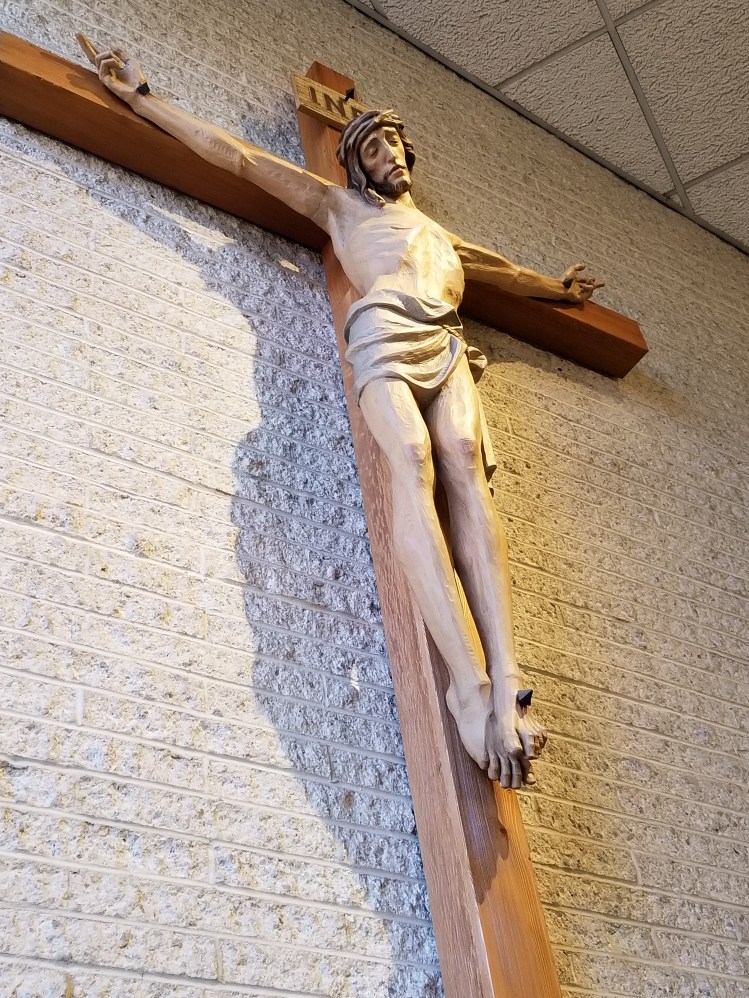
Most people are familiar with Luke’s account of the so-called good thief (Lk 23:39-43), one of the criminals that was crucified next to Jesus. Luke places Jesus between two men that are receiving the same sentence as He is. One of them shows no sorrow or remorse and becomes an instrument of Satan’s temptation of Jesus in His final moments. “Are you not the Messiah? Save yourself and us,” he calls out to Jesus. (Lk 23:39) The retreat leader pointed out that the man does not ask to be saved first, but rather secondarily. He indicated this is a sign that the call for Jesus to save Himself is not merely from the criminal, but from Satan himself, tempting Him in these last hours. Jesus’ ministry started out with being tempted for 40 days in the desert. Luke even indicates, “When the devil had finished every temptation, he departed from him for a time.” (Lk4:13) I’ve often wondered why it was written or translated like that, but when the leader pointed out the unusual phrasing, it totally makes sense! After all, if you were perishing, wouldn’t you ask Jesus to save you first?

In pondering the exchange between the thieves, I see it as a battle we all have within us as we address our concerns to God. On one hand we call out to God to save us, but instead of asking, we command Him to do so. He is the Messiah, we expect Him to do His job and save us from whatever challenge we are facing at the moment. Then there is the good thief, who reprimands the other one and acknowledges his crimes and the punishment he deserves. He does not ask Jesus to be removed from the hardship or consequences, even when they mean he will die. Instead, he simply asks to be remembered. Did he know what he was asking for? Did he hope to be spared the gruesome death? Or was he truly acknowledging God could do anything, and whatever God could do for him, would more than satisfy him? Do we pray with the same faith and trust in God? Do we allow God to work through whatever circumstances we are in to bring about a greater good? Do we see that hardship can be a stage for God’s mercies and miracles? 

There is a whole song composed of the famous line of faith that the good thief uttered: “Jesus, remember me when you come into your kingdom.” (Lk 23:42) Both thieves acknowledged that Jesus was more than just a man. However, it was the good thief who accepted Jesus as his King. He accepted Jesus’ judgement of him. In the thief’s final hours, he was living as a man converted, not just one who acknowledges the Divine, but one who accepts all that He bestows. The Christian life is meant to be one of putting that same acceptance into practice. And that’s why the emphasis is on practice, since it’s not something that always comes easily. Too many times we try to order God to do what we think is best for the situation or for ourselves, forgetting that God knows all and can determine what is better for us throughout our lifetime on earth and what will lead us to heaven. Sometimes we do need to go through painful situations that we don’t understand the why of it happening. But even if death is the worst consequence, Jesus has already conquered it. The only thing worse than death would be eternity without God. 

It is easy for us to read this 2,000 years later and forget that the good thief didn’t know about Jesus’ resurrection. He didn’t know the ending, but he trusted in Jesus anyway. Did he understand Jesus’ response to him indicating he would be in Paradise? Or was it merely that Jesus responded positively to him, that he was able to make peace with his circumstances? I am truly amazed at the man’s trust in God. Why do we still struggle with trusting Jesus when we know the glorious ending? 

I want to be like the good thief. Not only because he goes to heaven, but because he has such amazing faith and trust in God, and is not ashamed to proclaim that truth to others. He accepts not only the consequences of his actions, but also that Jesus is King. I pray that we all may live out our days with the same faith, trust, and action that he demonstrated on the cross next to Jesus. 

Vainglory

As I was recently listening to a Lenten reflection, one of the words used caught my ear and stuck in my head: vainglory. What a fascinatingly descriptive word! 

While I know I’ve heard the term before, it’s not used in regular parlance today. However, perhaps we should bring it back and use it, since its synonym is rather charged in a secular way. Pride, at least from a cultural perspective, is not a sin, but rather something to be flaunted, especially in regards to alternative values. Yet vainglory paints a picture of how our desires can lead us to sin. All glory should be given to God, as He made us with all the skills and talents we have. Even if we put hard work into accomplishing something, God still gets the glory, as we are a reflection of His creation. We can appreciate and celebrate our accomplishments, but need to practice humility in the praise we receive.

According to Merriam-Webster, the definition for vainglory is, “excessive or ostentatious pride especially in one’s achievements.” Reflecting on what it is doesn’t go deep enough, we also need to reflect on how much we have acted in such a way. It can be easy to deny that we behaved like that, but the sin of vainglory is not just an action, it’s also a driver of our actions. Are we doing things because we will be recognized for what we do or say? We could be doing many good deeds, but if we do them to impress others, or for them to be favorable to us, then we lose out on the grace we could receive in doing the kind acts for the sake of God and neighbor. 

A person who acts with vainglory, seeks honor and praise for themself. However, the drive for glory could be through many different methods: like money, power, or gossip. Perhaps one wants to be the person everyone at work goes to, because they can get the answer to any question. One may say that they’re just helping their fellow employees, but when folks praise their efforts, it’s hard not to make the praise become why one does it. Thus when we receive a compliment, we should immediately thank God ourselves and pass along the praise to Him.  

The stumbling block with vainglory is that it is tied to our hearts and our desires. But like any sin, in order to combat it, we first need to be aware of it. Perhaps we reflect daily or weekly on our actions, or maybe just one at a time, and ponder what prompted us to do or say whatever it is we’re reflecting on. If we can start to recognize when we act out of haste, so as to not to think about why we’re doing something, we can then determine if our intentions were for our own glory. This reflection doesn’t necessarily mean we stop, only that we ask God to lead us and guide us in determining if it is His will and to thank Him afterwards, especially if we have received compliments. 

As we journey through these last weeks of Lent, let us remember the humility Jesus showed in all events of His Passion, Death, and Resurrection. It is Jesus who is our Savior and all glory and praise go to Him, since we can only partake of heaven due His efforts. And He did it for, and through, Love for us, not for the glory we give Him.