Catholic Girl Journey Logo

Four lasting things

In a homily on All Soul’s day, the priest mentioned the four last things: death, judgement, heaven and hell. However, my head got stuck on the word “last.” Why are these things last and why do we need to be mindful of them?

Death connotes the end. If death is truly the end, then what about the other three items? For non-believers, there is nothing that comes after. The only thing that is last for them is death. However, for a believer, death is a transition. As humans we are a combination of body and soul. When we die, it is our body that ceases to be animated, yet our soul still lives on. As Catholics, we believe that our bodies will be resurrected and reunited with our souls and that the separation of the two in death is only temporary. Jesus, the Second Person in the Trinity, took on human flesh in order to die, or more specifically to give His life for all who would believe in Him.

Each of us will die at some point, no matter what methods we may take to prolong our lives, our bodies will eventually fail. Catholics have hope for the life to come, that is what comes after death. So is death really a last thing? Perhaps if we view death as the gateway to what’s to come, then death is not the last thing, but something that is lasting throughout eternity. Or maybe death is too much of a human word to use. Life and death are polar opposites and are really describing the physical state of an organism. Since we also have souls that transcend the physical world, death does not really apply to that portion of a human being. Even for believers, death and the thought of dying can be scary, yet we should not fear it because it is not the end, but rather a change. Perhaps what we fear is not death, but rather some of the other last things.

It would be easy to say the thing to fear is the judgement, but even that should not be a surprise to us. God has given us many resources: the Church, the sacraments, the Bible, and the saints just to name a few, that provide us guidelines and examples to follow and observe. If we choose to go against God’s will it is an active choice we make. Is it easy to explain away why we are not culpable? Maybe to ourselves, but God will not be looking for explanations, He will be looking at the fruit of what our choices brought about. As we are all sinners, a verdict will be that we have not followed God’s will. However, Jesus will stand beside us as our Advocate, pleading that His Passion and Death paid the price that we would need to pay. So why is the judgement one of the last things? Here again it is not something that is brought to an end, but rather the judgment that is rendered is one that is ever lasting.

The judgement will identify how we will spend the rest of eternity, either in heaven with God or in hell away from God. Our lives on earth, the choices we make, will lead us to either place. Like death and judgement, these are not the end, or a “last” thing but rather lasting things that will never end. If we spend our lives going against God’s will, why would we want to be with God in heaven, especially if we don’t take the time to get to know Him? Yet if we spend our time getting to know God, trying to do His will, and seeing Him in all of creation — especially in our fellow man — then our hope in Jesus and His Mercy will render a verdict for heaven, even if we need to make a slight detour in purgatory to dispel any remaining imperfections.

There may be four lasting things, but we will only experience three of them. In the month of November as the Church’s liturgical year comes to a close, she reminds us of these everlasting states. Her mission is to give us the tools so that our lasting state of being after a deathly transition and judgement is heaven, but she also reminds us that we have the free will to choose the alternative by the way we live our lives on earth. Our choices have lasting consequences. Choose wisely.

Catholic Girl Journey Logo

Built by God

Are you building a hut, a house, or a mansion for God in your soul? Scripture has often used the analogy of a building to correspond to our relationship with God; and the same holds true even today.

When we imagine what a hut would look like, we think of something made out of necessity. It’s to protect oneself from the elements and not meant for longevity. While it may last months, maybe even years, without constant upkeep and reinforcements, it’s not likely to see a full generation of living. Most huts are built directly on the ground, so there is little-to-no foundation for support. When we only seek God in times of trouble, not recognizing Him at any other time in our lives, then we are building a hut-type relationship with God. It’s meant to be assistance to us as we weather the storms in our lives, but not meant to be everlasting. 

When building a house, no matter how modest, one of the first things that is done is the foundation. This can be something deep, containing an underground basement, or can just be a slab of concrete — something flat, and supportive. As Catholics, we have a wonderful foundation in the sacraments. Baptism is the most basic of all the sacraments and welcomes us into the family of God. It is also the initial pouring out of grace and the Holy Spirit upon our souls. How we respond, not only to this initial introduction of grace but through the whole of our lives, determines what kind of house we build for God in our souls. Some try to balance belief in God with the demands of the world. While faith is still the base layer for that relationship, the house will be modest, due to secular competition. When we embrace all that Catholicism has to offer, fully receiving the sacraments with the intention of building a stronger relationship with God, we make more room in our souls for God to effect change in us. 

Making time for morning and evening prayer, whether it’s following the divine office, a variation of it, or a simple Our Father, Hail Mary, and Glory Be, we are inviting God into our lives and all our experiences. We are asking for God’s guidance to help us choose to do His will and to keep us from choosing the enticement of temptations. Yet if we seek to challenge ourselves to go beyond routine by making a retreat or adding additional pious practices into our lives, we continue to expand our relationship and make a larger home in our souls. When we seek to strengthen our relationship with God, we are asking Him to help us dig out all that keeps us from Him. It’s like seeking an experienced excavator who will look for the weaknesses in our foundation and repair them. This is not a simple bandage fix, but one that takes time, effort, and a whole lot of mess before the foundation is corrected and strengthened to add to the house. 

When we picture a mansion, we think of a huge house with more bedrooms and bathrooms than anyone could ever need in a single home. We would expect that, like a massive tree which has an even larger root system, a large mansion would have an extra deep and extra reinforced foundation.  When we think mansion, we think ultra wealthy and ultra luxury. Welcome to the homes of the saints! While they may have been poor on earth, they built a relationship with God that would outshine any grand architecture on this side of eternity. Not only did they embrace the sacraments and all the teachings and traditions of the Catholic Church, but they made God their focus during their life on earth. Regardless of their vocation, they pursued bringing the light of Christ to the time and place they were at that moment. They allowed God’s will to be accomplished through them, being His hands, His feet, His eyes, and His smile. The fruits of their labors are reflected as the many rooms in the mansions of their souls. 

Perhaps it’s not so much of what type of dwelling are we building for God in our souls, but what kind of building are we allowing God to create within us. When we cooperate with God’s will, we are allowing God to help us change to become the best version of ourselves. A hut, a house, and a mansion are all dwelling places. Let us begin by welcoming God into our humble abode and asking Him to dwell within us.  

Catholic Girl Journey Logo

End of times

From social media feeds, to headline news, to YouTube suggestions, the end of times seems imminent. Will Artificial Intelligence (AI) take over the world? Will climate change lead to multiple cataclysmic catastrophes that will wipe out civilization? Will the population explode to the point that the earth cannot sustain the number  of people or will it shrink to the point that society cannot sustain itself?

Anxiety, especially over events we cannot control, causes suffering and can be very hard to overcome, even for a person of faith. Yes, I believe in God and I know that He will bring the most good out of any circumstance, but what about me? How am I going to be able to handle these overwhelming prospects? This is where Satan can get a foothold. He wants us to lash out and react, not with confidence in God’s divine providence, but in fear, anger, and hatred. Previous generations experienced wars, famines, floods, and all sorts of dire challenges. For some it was the end of their existence on earth. For others, it was the end of life as they knew it, but surviving the traumatic events was the beginning of a different way to live. But the world still turned. 

For those who succumbed to the catastrophic events, we can only hope and pray that God had mercy on their souls. They were given time on earth to know God, but they also had the choice to ignore Him or to think they could spend time with Him once they achieved their desires on earth. Some may not have had much of a chance at all on earth. While their death seems horrible and senseless, perhaps if they had survived, they would have faced an even worse challenge. For those who did survive, no matter their beliefs, God allowed them to make it through the challenges. We may not know the specifics of their stories, but we know that not only is survival possible, but that we can weather the change and continue to flourish. 

We have seen many changes throughout history, and even in the past sixty-some years. Man has walked on the moon and made massive strides in technology. Not only have computers been invented, but what were once the size of a room are now small enough to fit in the palm of your hand and can do exponentially more calculations than their predecessors. Yet with all these changes and purported advances, our world has only gotten more unpredictable. We know we need to wash our hands to lower our risk of illness, but that it won’t save us from cancer. We are able to put a name to various illnesses and diseases, and while many can be cured or at least managed, we still don’t have complete control over our bodies. It would be great if I was able to control if and how badly I would develop arthritis in my knees, but I’m not. The only thing I do have control over is exercising to prevent, or at least delay, the arthritis from getting worse. 

With all the negative, and often sensationalized, content and news being directed toward us, it can be hard to have hope. This year especially, the Church is celebrating the Jubilee year for Hope. It is all at once: 1) a reminder to be hopeful, 2) to be thankful for hope-filled faith, and 3) to reflect on how we can live out the hope we have. We are bombarded with messages that are anything but hopeful. And if that wasn’t enough, life itself often gives us sufficient challenges to test just how much hope we do have. Our faith is hope-centric, as St. Paul says, “Now hope that sees for itself is not hope. For who hopes for what one sees? But if we hope for what we do not see, we wait with endurance.” (Rom 8:24-25) We’ve never seen heaven, and yet we hope to spend eternity there. We hope in the mercy of God because He loved us so much that He willingly suffered, died, and rose again to demonstrate that there is more to life than just what we see. When we begin to be plagued by doubts about being hopeful, we must turn to Him and the scriptures to fill us with grace and hope in His Will. 

We don’t know what will come to pass or when the end of times will be. However, we can prepare for heaven, which is what life on earth is all about, by seeking a relationship with God and with all those He loves, which is every person because each is made in His image and likeness. By following Jesus’ example and spending time getting to know Him, we can prepare ourselves for whatever may come our way. We can be hopeful that we will be ready for heaven, despite whatever challenges we are called to face. And if we are destined to endure hardships, we can spend even more time in hope and preparation for eternity. 

Catholic Girl Journey Logo

Food for the journey

While the weekday masses are now firmly back in Ordinary Time, the Sundays after Pentecost continue to highlight major components of the faith. Last week was the Most Holy Trinity and this weekend the focus is on Corpus Christi, or the Most Holy Body and Blood of Christ.

One way a parish can celebrate Corpus Christi is by processing with the consecrated Host in a monstrance. For some it may be a quaint way of keeping old traditions alive. However, there’s more than just tradition in this ancient practice. Look at the pieces of what goes into a procession: the Holy Presence of Jesus in the Host, the congregation walking behind, and songs of praise, thanksgiving, and adoration. This is like a miniature version of life. This is what we’re supposed to do on a daily basis: walk with God, allowing Him to lead us, and sing His praise in all that we do. In practicing on a small scale on this solemnity, we are exercising our faith muscles so that we can use them in our daily lives. 

The Eucharist is food for our life journey. While the Church asks us to attend Mass weekly, if we were able to attend daily, we could receive Holy Communion each time. However, regardless of how often we receive, we need to be on guard about it not becoming a habit. A habit, as described in Merriam-Webster is, “an acquired mode of behavior that has become nearly or completely involuntary.” Basically, when the Eucharist is received out of habit, then its effect on us is diminished. It’s similar to when Jesus visited His hometown, and because the people thought they knew Him and who He was, He was not able to perform many miracles amongst them. 

Attitude is the key for preventing such a precious gift from becoming a mere trinket. At each Mass, we prepare ourselves to receive Jesus in the Sacrament by being attentive and participating in the liturgical responses. We take the time of silence before receiving to open our hearts, to have an attitude of welcome for Jesus. Just before the Our Father is one of the most important prayers the priest says: the Eurcharistic Doxology: “Through him, with him, and in him, in the unity of the Holy Spirit, all glory and honor is yours, Almighty Father, forever and ever.” In this prayer, we lift up the Mass, with all our intentions through Jesus, uniting them with the Holy Spirit in an offering to God the Father. When we receive Jesus, the opposite happens: we allow Jesus to work through us, with us, and in us, and in unity with the Holy Spirit. We don’t receive the Sacrament to stay the same person we are in our sin, but rather to be transformed out of our sinfulness into the best version of ourselves. We strive to become the Body of Christ on earth by allowing Christ to use our hands and feet to do His will. The Sacrament not only feeds us spiritually, but stirs up the Holy Spirit we received in Baptism and Confirmation to continue the guidance long after our bodies have absorbed the Host. 

Corpus Christi is the Latin phrase for the Body of Christ. As we celebrate this food for our journey, let us welcome the solemnity and the sacrament it celebrates, so that we can be blessed with all the graces God can bestow to our open hearts. 

Resolutions and new beginnings

This year the Catholic Church is celebrating the Jubilee Year of Pilgrims of Hope. The theme conveys that we are on a journey in which we should keep a positive attitude, i.e. hope. But what really is hope?

I was watching a YouTube video recently where the commentator’s remark drew a distinction between hope and expectation. It’s caught in my subconscious, as it randomly pops into my thoughts. The word hope gets used quite frequently in a very casual manner. People hope for all green lights when traveling. After several days of rain, one hopes the sun will come out soon. But is this the type of hope we as Christians are supposed to have? Or, is hope like love, where there are several layers of meaning, depending on the context?

According to Merriam-Webster, the definitions of the word hope as a verb are: 1) to cherish a desire with anticipation, 2) to desire with expectation of obtainment or fulfillment, and 3) to expect with confidence: trust. As I read these three definitions, I nodded in agreement to each of them, however, it seems to me that hope is really all three of these together at once, rather than optional uses of the word. These definitions use the word expect in them, so how can hope and expectation be different? I think the last definition is the one that rings true for Christians, when we trust in God, we let His will be done, even when the outcome is totally not what we would plan for ourselves. Expectation seems to convey a sense that we know what the outcome will be, where hope is only anticipating a positive resolution.

I was surprised that the definition for hope did not convey a joyful aspect. We don’t hope for something bad to happen, but something that is good. Perhaps it is signaled in the first definition of “cherishing a desire.” But hope goes beyond merely wishing for something specific, it is an attitude of positivity in anticipation. There’s a sense of mystery to hope, and an awaiting of surprise. The expectation of hope is to be delighted in what comes about. Hope can be either a resolution, or a new beginning, or both! 

Being Pilgrims of Hope, our destination is heaven, which is also  the beginning of eternal life with God. We have some indication of what heaven could be like, but we won’t really know until we get there. In the letter to the Romans, St. Paul says, “Now hope that sees for itself is not hope. For who hopes for what one sees?” (Rom 8:24) If we look at the world around us, we can see many beautiful and wonderful things created by God. However, our world is a fallen world, and we can also see the corruption brought about by sin. Expecting heaven to be like our current world without corruption is as far as our limited human minds can comprehend. Yet hope also conveys that there is more than just our expectations. We will be fulfilled in our immersion in the glory of God in heaven. 

As we journey through this jubilee year, reflecting on what the word hope means to each of us is key to the celebration. According to the Catechism of the Catholic Church, “the virtue of hope responds to the aspiration to happiness which God has placed in the heart of every man…it opens up his heart in expectation of eternal beatitude.” (CCC 1818) May we leave our limited expectations of God and heaven behind and joyfully look forward to being with God, in the sacramental encounters in our life on earth, and in full communion with Him  in the life to come.

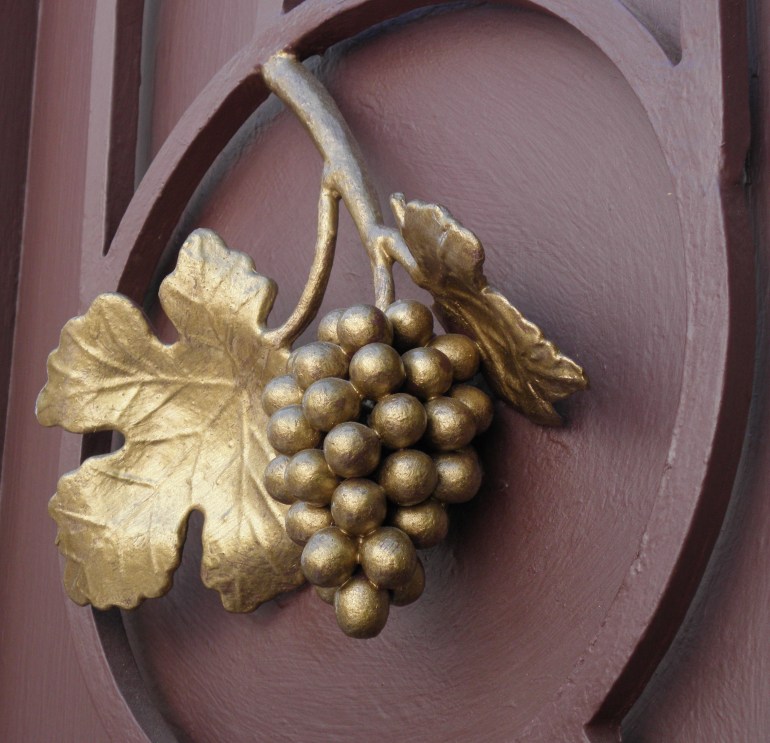
Grape leaf and bunch of grapes gilded on a church door in Israel

Best for last

Sometimes scripture can seem sparse on details; other times there are details that we just gloss over. During Sunday’s Gospel, John’s account of the wedding feast at Cana, one thing stood out to me even though I’ve heard this passage numerous times. 

The account of Jesus’ first miracle of turning water into wine has been reviewed and commentated on for thousands of years. When it comes to the dialog within the passage, many focus on what is said between Mary and Jesus. But if we consider that no dialog account is without need or meaning within scripture, then the address given by the head waiter deserves to have a closer look. 

Some may look at this as a third-party proof that Jesus changed the water into wine. But what if there is a deeper meaning? Is this only about the wine served at a wedding over 2,000  years ago? Or is it an eternal statement? 

From Genesis to the Psalms to Isaiah, various aspects of a wedding and marriage are described throughout the Old Testament. It is the building block of society. It is the family church. It reflects the relationship within the Trinity, albeit very imperfectly. The wedding feast is often considered to be an allegory used to describe eternity: it’s the picture that is painted for us humans as to what eternal life will look like when we are in heaven. Even the Church often describes herself as the bride of Christ. As members of the Church, we too are brides of Christ in that we are preparing for our marriage to God, which is our eternal life in heaven. The covenant of marriage is a sacred bond, so anything within the scriptures that references a wedding or marriage should cause us to pay more attention to the passage and look beyond the superficial meaning within the account. 

How is it that we know what was said between two unnamed people in this story? John being deeply spiritual in his reflections of his time with Jesus, includes this portion of the conversation because it takes on significance regarding our eternal life. If we think our life on earth is good, what is waiting for us is far superior. What the head waiter commented to the bridegroom at that moment refers to what Jesus, as bridegroom to the Church, does for our lives in saving the best for last. Through the ministry that Jesus carries out, He is able to open heaven to those who profess in word and deed that He is the Son of God and our Savior. Heaven is the good wine. Life is transformed from just plain old water to the tasty, refreshing wine. That our life on earth, a physical existence in time and space, is transformed into eternity with God, never in need or want again. 

As Christians, it is important for us to remember that our life is not contained to just our earthly existence. What we do daily impacts our readiness for the life to come. We hope for an eternal life spent with God, seeing Him as He truly is. We can be confident that God does provide the best: life that is everlasting. 

Catholic Girl Journey Logo

Why do good?

There is an old idiom that says, “You reap what you sow.” Even Jesus remarked, “Any sound tree bears good fruit, while a decayed tree bears bad fruit.” (Matt 7:18) However, when you look around society today, we  struggle to see where that natural justice is taking place. It can be very discouraging and make us wonder why we should try and do good in our lives.

Psalm 73 shows us that even in ancient times, there was a similar feeling:  

When we see those openly mocking God and living in ways that go against His teachings being acclaimed and considered social heroes, it can cause us to doubt ourselves and our beliefs. Then if we speak out against their words and actions, we quickly become the target of viciousness and spite! It’s like the tables are turned and we are the transgressors, because we speak contrary to their words and deeds. When the world seems to be upside down and the opposite of what it should be, it can be very easy to slip and lose our footing! 

The analogy of plants and trees may have a deeper meaning than just the surface of the words. It takes time for seeds to grow into plants. And it takes time for a tree to produce the blossom before it becomes a fruit. We can’t expect immediate repercussions to occur each time a person says or does something evil that is celebrated in our secular society. And likewise, we can’t expect to be showered with blessings just because we do a singlar good deed. For most plants and all fruit trees, they don’t produce a single item, but rather many. When we reap what we sow, it is not just a single instant of our lives that determines what we reap, but rather the whole of it. If our entire life parallels a single growing season of a tree, how much fruit would be on it?

Another consideration we need to keep in mind is that our world is very materialistic and repeatedly glorifies what is objectionable to God. Jesus tells us we need to pick up our cross and follow Him, not pick up our bouquet of roses and dance happily down the yellow brick road. It may appear that the wicked are prospering, but that is the image they hope to portray. They may even be deceiving themselves by focusing on the accolades they receive. We are called to live in this world, but not to be OF this world; which is to say that we do not look at our time on earth as the only existence we have. As Catholic Christians, we believe in heaven and the resurrection of the dead, and the consequences of our actions during our lives will impact more than just however many years we live on earth. We also recognize that our actions also impact the lives of those with whom we live, work, and interface.

Lastly, we are all sinners in some way and we will need to atone for those sins either here and now or in purgatory. When we practice doing good, we learn how to be aware of those around us. Sometimes good is actually doing something or helping another. Other times, it can be in not doing something, like repeating a piece of gossip that we’ve heard. When we follow Jesus’ example, we are training ourselves to be the bearer of good fruits. We may stumble from time to time, but we can, through the mercy of God, repent and do penance for our faults to lessen the impact of our sins. By having a relationship with God, He can prune away the dead, sinful branches within us, so that only the healthy, life-giving plant remains.

It’s very tempting to compare our situations with others who seemingly have it easy, even though they rail against the will of God. However, if we strive to always have a relationship with God, repenting when we falter, He will prosper us, if not in this time and place, then surely in heaven where we will see Him face to face. 

Catholic Girl Journey Logo

God’s place

Bishop Robert Barron has a saying that has become so popular, the Word on Fire organization sells t-shirts emblazoned on them: Your life is not about you. I would take it one step farther and add: Neither is heaven.

In many of the books and videos that Bishop Barron has participated in, he has consistently taught that we need to have a Christ-centered life. Until we order our lives around Jesus, we will never be able to have full peace and joy. This means giving up what we want, stop feeding our own egos, and instead, follow God’s will for us. That is what the saints have illustrated with their lives, so it is possible. In our secular-oriented age, which seeks only to soothe our own egos and appease our own feelings, it can seem like an impossible task. WIth God’s help, nothing is impossible.

As humans, we live in time and space and our language reflects that. We can talk about things that we will do in the future, things we are presently doing, or things we have done in the past. God is the creator of time and space, and thus exists beyond it. Trying to describe heaven in our language is difficult because our knowledge and language lacks the ability to adequately convey the spiritual realm. We say we want, or expect to, “go” to heaven when we die. But what is heaven and why do we want to go there? The Catechism of the Catholic Church tries to define its essence in three ways: God’s own “place,” eschatological glory or beatific vision, and the saints and the “place” of the spiritual creatures, the angels, who surround God. (CCC 326) The word place is used in quotes because in our time-and-space language, it’s the best word choice to use, even though heaven is outside of those constraints.

If we try using our language to describe going to heaven, it would be like getting on a plane with a one-way ticket and flying to another country on the other side of the world without any preparation and taking nothing with us. In most cases we would need at least a passport and perhaps a visa to enter that country. For some countries, certain vaccines or shots are recommended so that we don’t become ill with disease that is common in that area. Communicating with the local people may also prove difficult if we don’t know the language; we can’t expect everyone to speak like we do. If we traveled with some of our currency, we cannot expect it to be accepted in every place we visit there. Yet far too many people assume that because God loves them, they will be welcomed into heaven, God’s place, on their own terms. 

Heaven will be everything we want and hope for only when we want what God wills for us and hope in Him. We are given this time on earth to cultivate a relationship with Him. While we can never truly comprehend what is infinite, we can get to know aspects of God that He reveals to us through the Church, the sacraments, and our interactions with one another. When we live with Jesus at the center of who we are during our earthly journey, we are preparing ourselves to enter heaven. When our lives mirror the commandments, the beatitudes, and the works of mercy, it’s like we are learning the language of heaven and storing up foreign currency. When we participate in Mass and the sacraments, it’s like we are preparing our passports, visas and medicinal needs to travel to heaven.

If we aren’t interested in having a relationship with God while we are on earth, why would we want to go to heaven? If our lives are all about fulfilling our wants and catering to our feelings, going to a place that is God-centered would not be desirable. It’s not like we can try out heaven and see if we like it; if we go there, it will be for eternity. 

God created each of us with gifts and talents. He allowed whatever flaws we have, as we live in a fallen and corrupt world. He has given us the freedom to choose to have a relationship with Him. The more we want, desire, and pursue that relationship, the more we reflect what He has given and taught through the Church. When our lives are centered around God, then heaven will be a most welcome place. And when we go there, we will be able to call God’s place our home. 

Catholic Girl Journey Logo

Are you ready?

If Jesus’ second coming back to earth was tomorrow, would you be ready?

We don’t quite know what the second coming of Jesus will be like, nor what happens afterwards. What we anticipate is that at His coming, the dead will rise and all will be judged and then His kingdom will reign forever. For those of us who are still alive, if we still have faults that need to be purged, will there be some sort of purgatory for us? What will we do in eternity? Will we have jobs? Will we need to support ourselves? Jesus mentioned He will prepare a place for us, so if all our needs are taken care of, will we be forever contemplating God in all of His divinity? How can we prepare ourselves for something we don’t know — or perhaps more accurately — can’t understand with our finite and earth-bound mind? 

Each November the Church reminds us that the end is near. It’s a lot nearer than it was when Jesus first came. However, with two millennia passed, it’s hard to imagine the end of the world. Tumultuous activities, both natural and man-made, are supposed to herald the end, but that’s also been a constant since the beginning of civilization. Men have been predicting the end for the same amount of time, claiming secret knowledge has been revealed to indicate when it will come. Jesus dispelled that notion, indicating that only the Father alone has that knowledge (Matt 24:36).

It is an interesting juxtaposition, with the end of the liturgical year talking about the end of things, and the beginning of the liturgical year preparing for the coming of Christ. While we think more of a preparation for Christmas, the Church is gently reminding us that we need to prepare for both, the celebration of the historical time when Jesus was born as a man, as well as taking a look at what we could do better in preparing if He was to come back to earth for the final judgment. We know we’re to live our life trying to do God’s will and cultivating a relationship with Him. But to think about what will happen afterwards can be a bit scary and uncomfortable. It’s much easier, fun, and comfortable to think about preparations for Christmas: what presents to buy, how to decorate, what food to make, and with whom we will celebrate. 

It’s very easy for us to get lost in the daily aspects of living life on earth. The role models we are to emulate, the saints, are celebrated at the beginning of November. This isn’t mere coincidence; this is the Church giving us the opportunity to focus on the goal of our lives as well as to dive deeper into the lives of those we know are spiritually closest to God. If we haven’t done so during this month, Advent is also a good time to seek out some saints that we don’t know very well and learn about their lives. These last two months of the year can be a supercharging spiritual renewal, if we pursue it. It’s like the Church is saying: A) here’s the goal and examples of saints to follow, B) the end is near, but don’t be afraid because, C) the end is really a new beginning in the life of Christ when He comes. If the world does not end, we should still be preparing ourselves for it as well as the coming of Jesus in our daily lives (in the people we encounter as well as in receiving the Holy Eucharist), as well as preparing to celebrate His birth as it occurred in history. That’s a lot to think about for a mere human brain!

While it’s not just during the last two months of the year we’re to focus on the end that will bring a new beginning, setting aside the time to focus and take stock of our spiritual welfare is a worthy endeavor. The Church gives us the reminder and the resources, it’s up to us to acknowledge and pursue it or take our chances that we still have time to prepare the day after tomorrow. 

Stealing into heaven

The second set of the seven last words of Jesus were addressed to one of the men being crucified with Him, the man commonly referred to as “the good thief.” Let’s take a look at Jesus’ response to that man and dive deeper into the possibilities of what prompted it.

“Amen, I say to you, today you will be with me in Paradise.”

Luke 23:43

Merriam-Webster defines amen as an interjection that is “used to express solemn ratification.” When Jesus uses it, it’s like putting the whole phrase on a billboard of flashing lights with lots of exclamation marks. It calls our attention in a big way and makes us take careful notice of what is being said. This is not just for the person being addressed, but rather for all of us.

“I say to you…” is very simple phrasing, but carries a great weight to it. The “I” in this case is really the great “I AM,”  the one who is the cause of all life. The word “say” is very humble and perhaps a more illustrative word to use is “declare.” Jesus makes it very clear that what comes next is absolute for this man, beyond any shadow of doubt. 

In this physical realm that is measured in time and space, having a delineation of time, the word “today,” indicates the immediacy of the action that’s about to take place. Jesus assures the man that He will be joining him in the most perfect state of bliss there is: the paradise that is heaven. This thief seems to be stealing one more thing, bypassing any purging and going directly into communion with God. 

For those still on earth, this can seem an outrage, after all this man even admitted to his crimes. Surely he must be punished! (As if being crucified was not punishment enough?) If we look at the preceding verses, 39-42, the man does three things that most people spend their whole lives trying to do. First, he acknowledges Jesus as God, but not in a statement of belief but in correction to the other man who is also being crucified with him. His chastisement is a teaching moment for all of us, that even in difficult situations, we can and should speak up for the Truth. Secondly, the man admits that the crucifixion is just punishment for the crimes he committed; he is indeed taking responsibility for the sins he committed. Lastly, he petitions Jesus, not for forgiveness or to go to Heaven, but humbly asks just to be remembered. Perhaps he is struggling to forgive himself for the actions that have put him on the cross. Since he believes in God, I don’t think he would doubt God’s ability to forgive, but rather seeks a lesser blessing. He is, before all the world, changing from a thief into a saint. 

Jesus’ powerful response reminds us all of what a life spent seeking a relationship with God is all about. It illustrates that while we have breath within us, it is never too late to turn back to God, acknowledge our sins, and pray. While the man still had to deal with the trauma of such a painful death, knowing that upon its cessation he would be welcomed into heaven must have restored his hope and eased his mind. Even in His final moments, Jesus brings healing and comfort to those who acknowledge Him. 

In this time of Lent, let us look at the example of this “good thief” and see where we need to humbly repent of our sins, turn back to God, and spend time in prayer — both for ourselves as well as for others.